"Partnership takes science beyond classroom" by Amy White for The Texas Catholic.
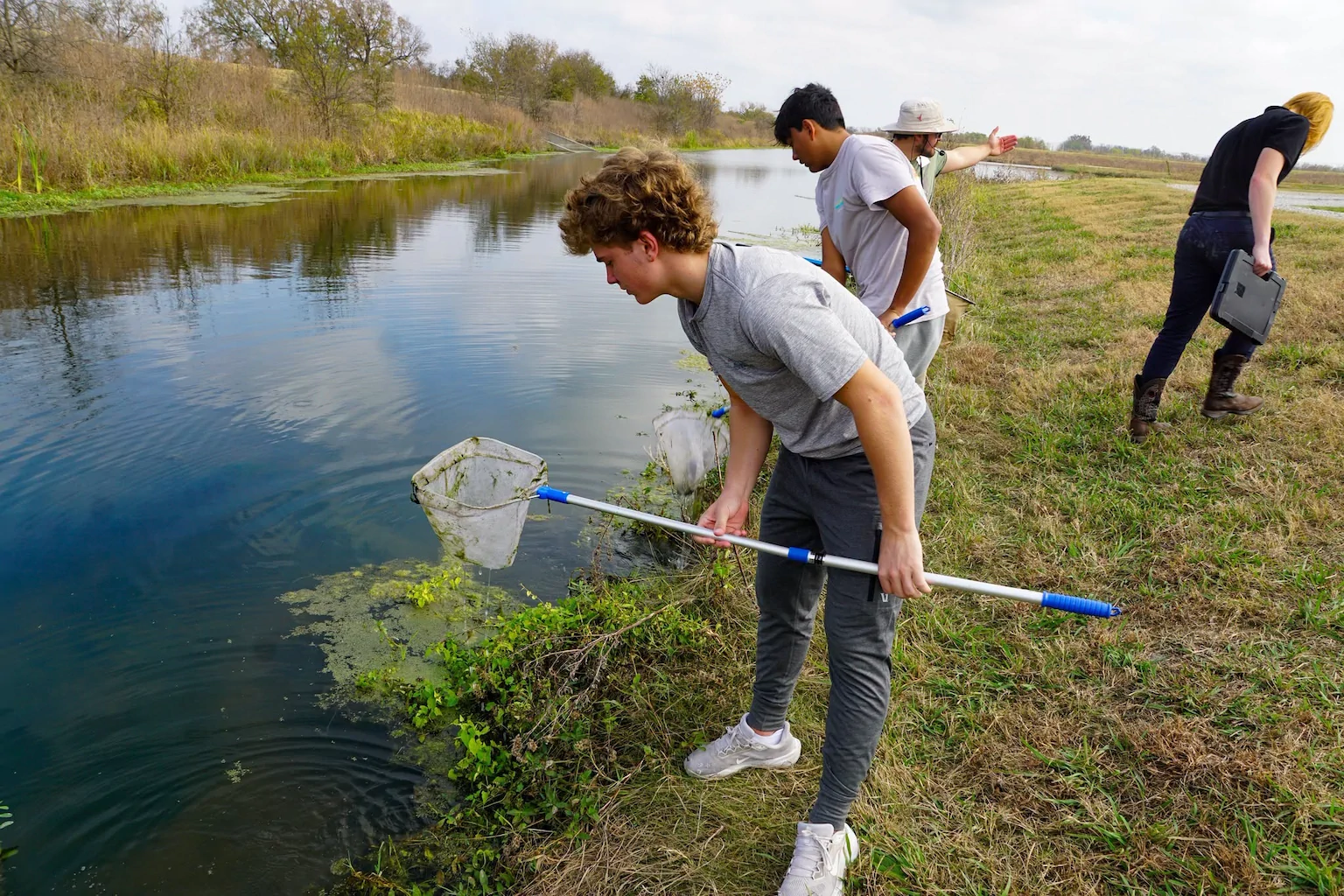
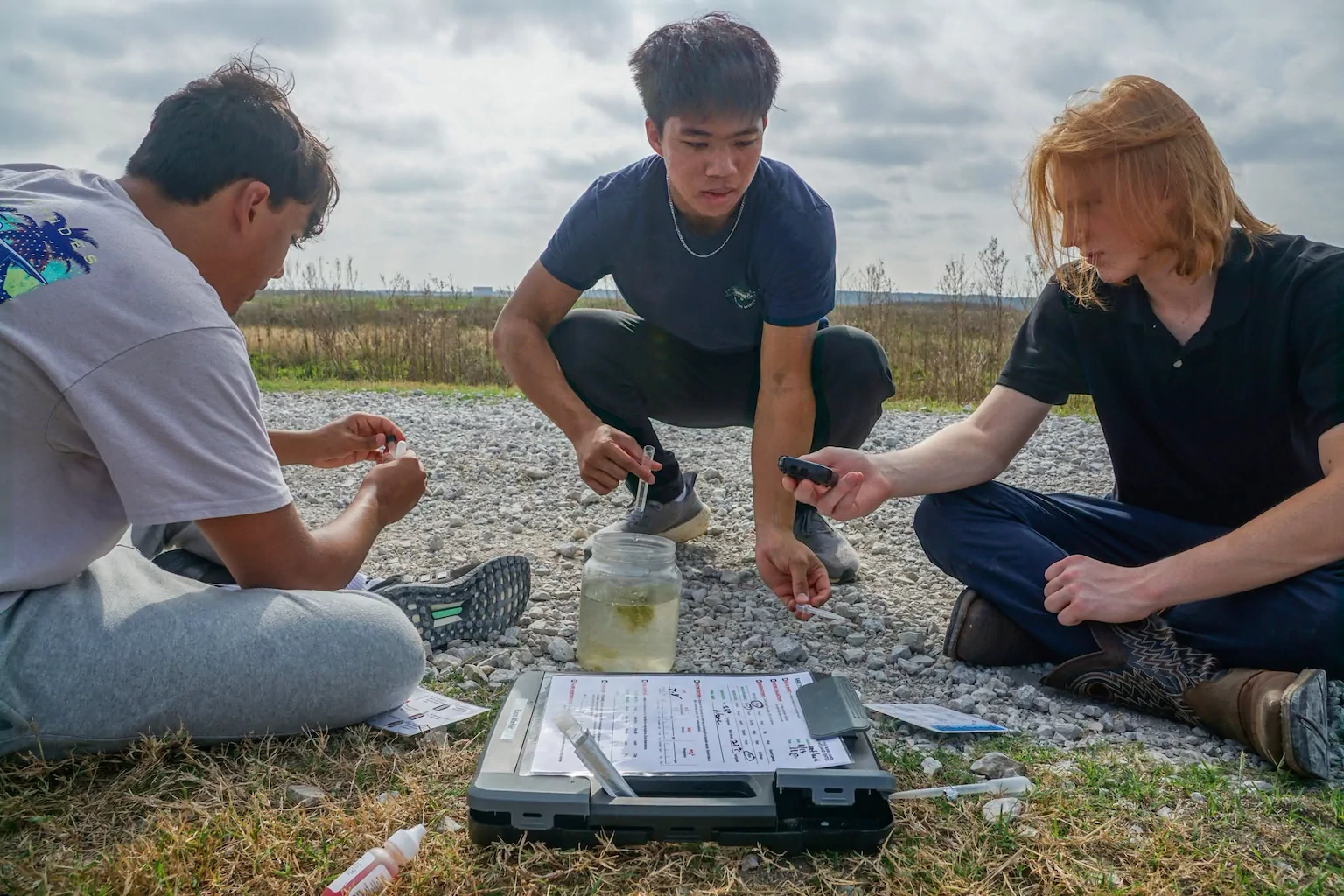
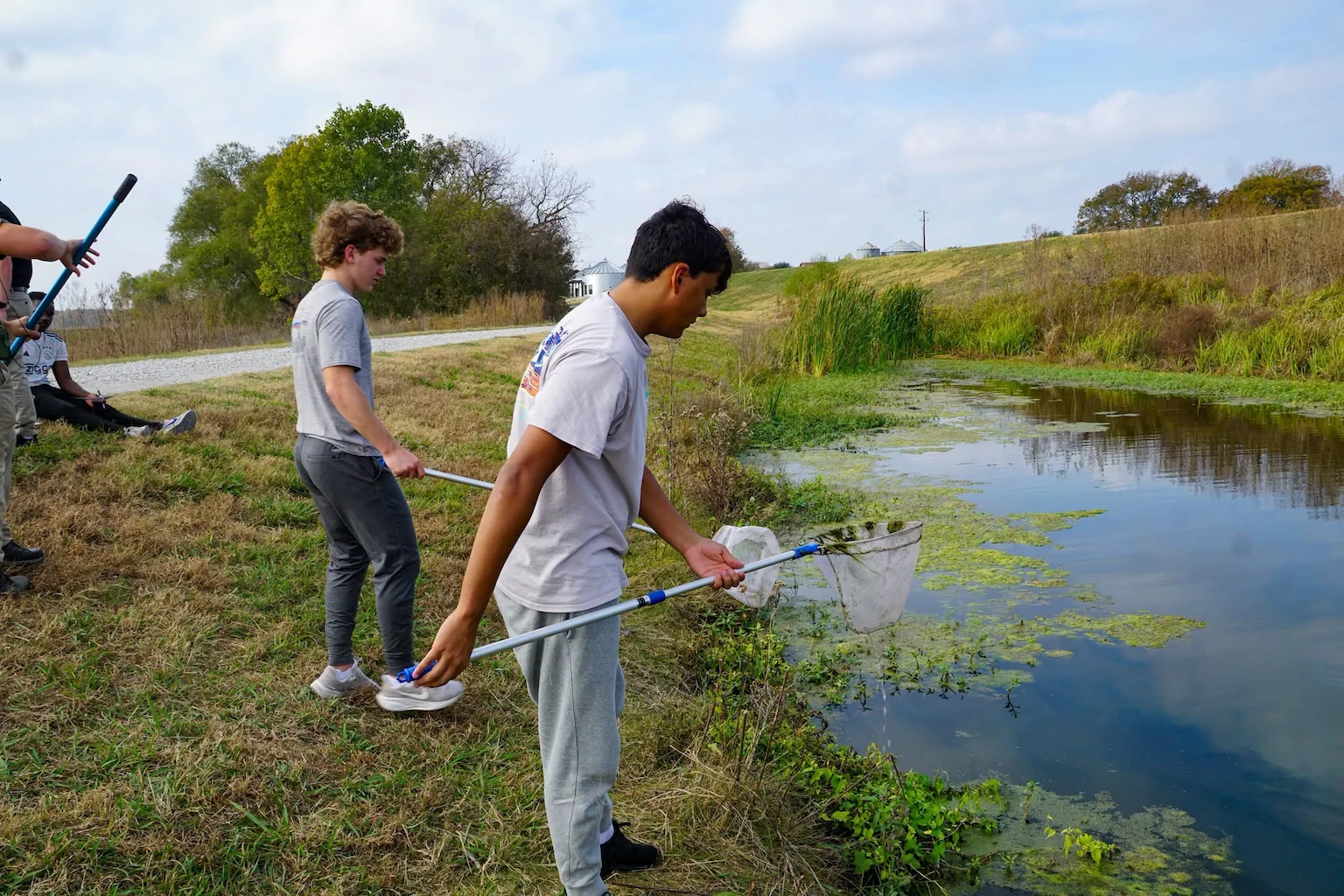
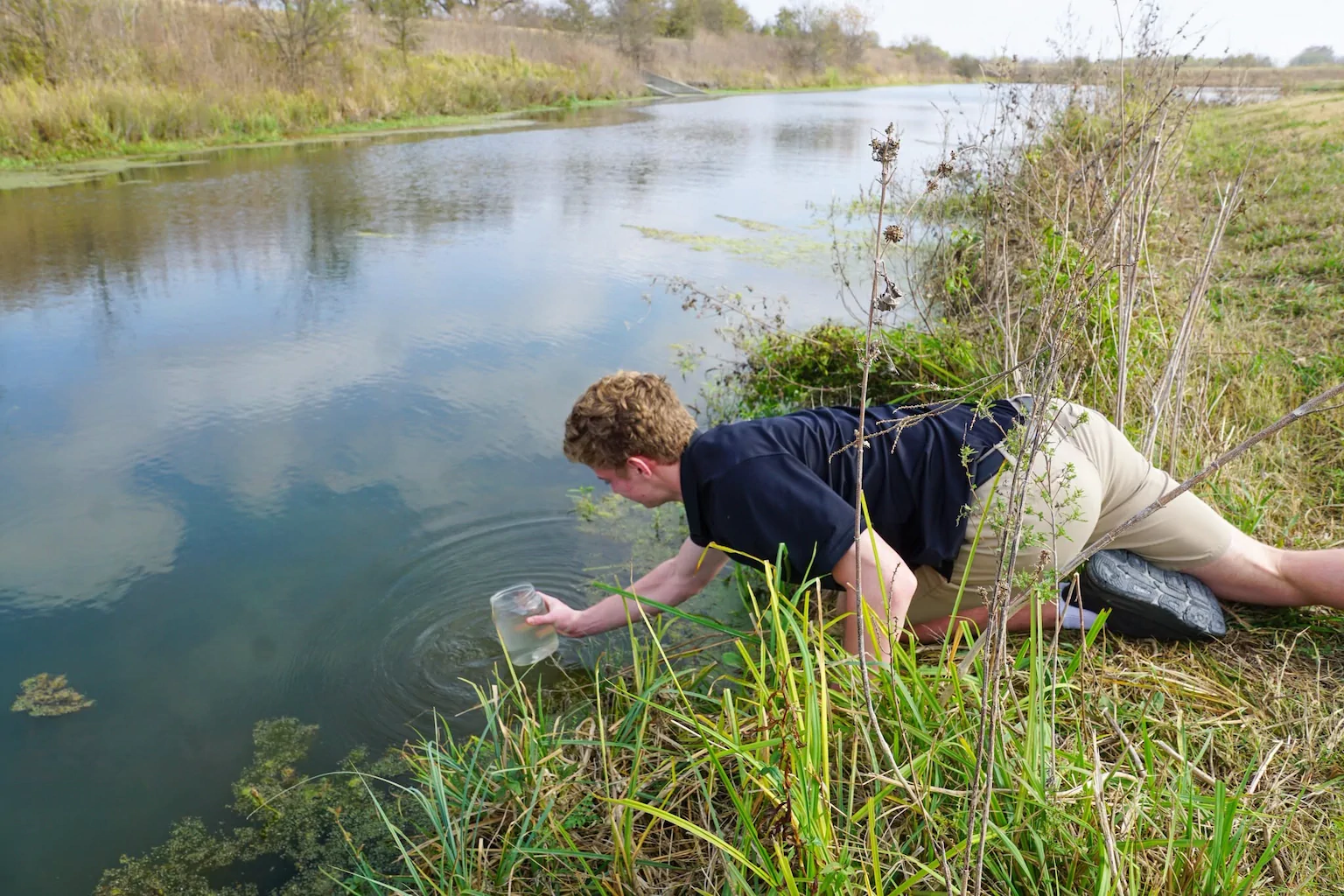
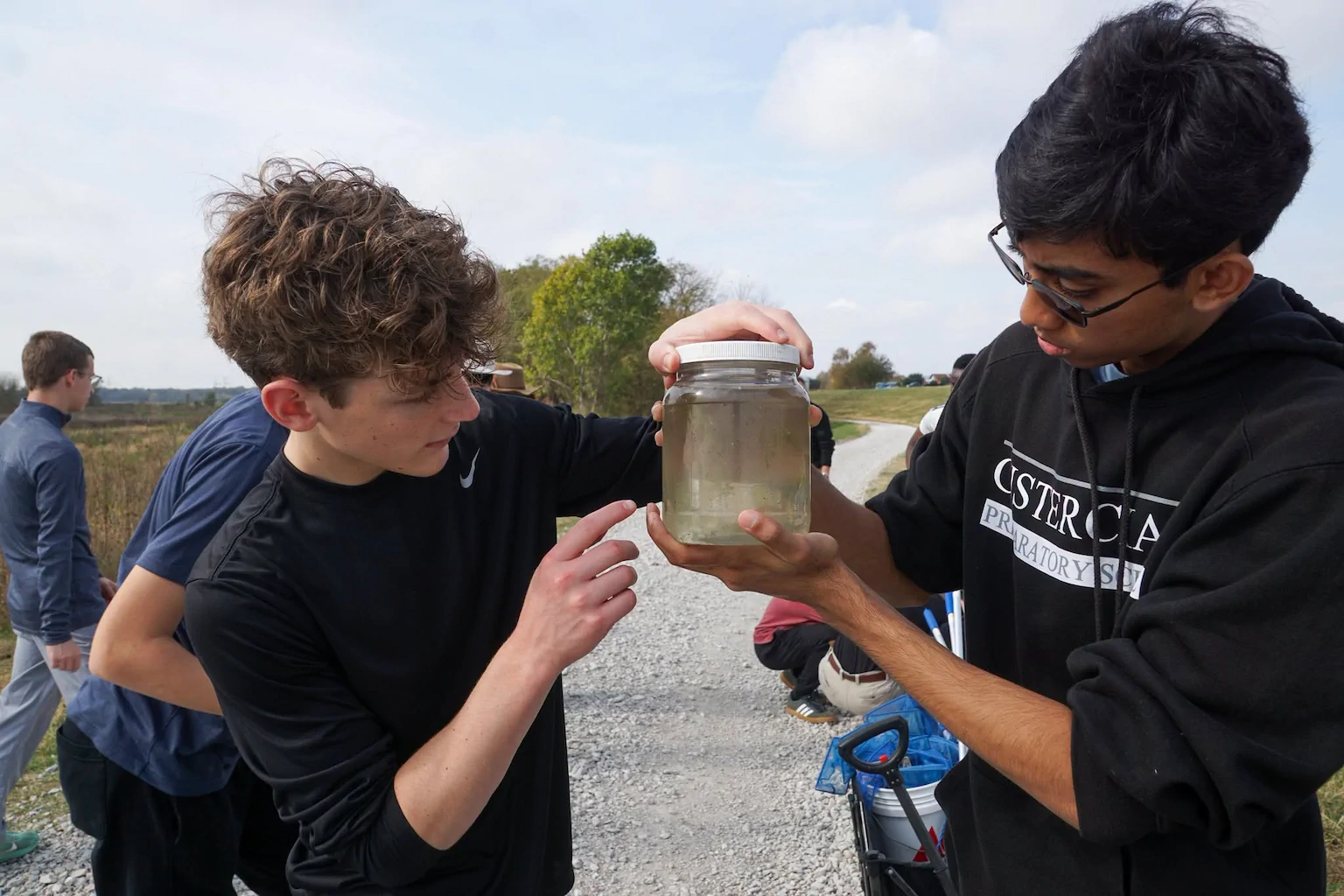
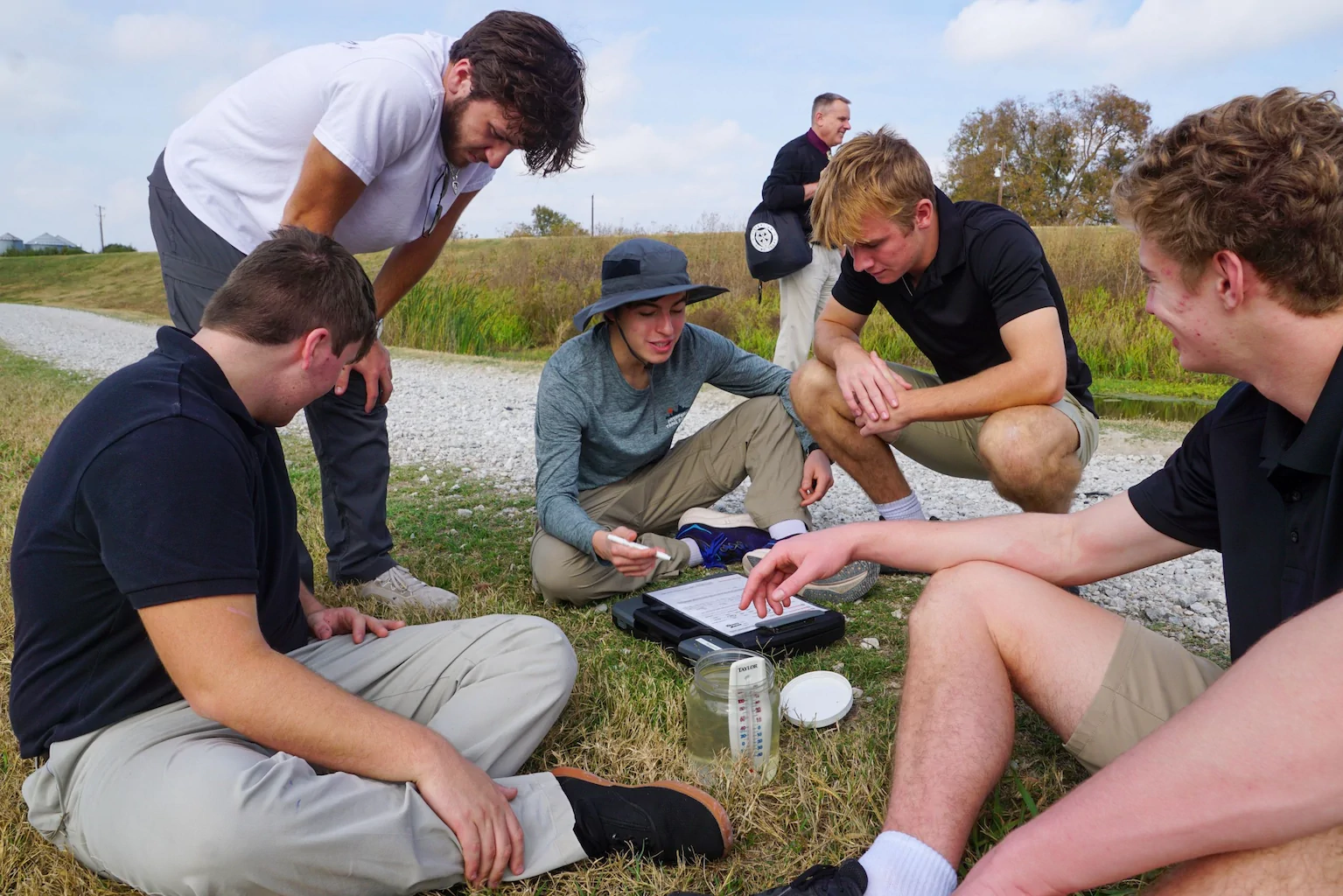
IRVING — With forks stretching toward the Oklahoma border, and portions snaking into Dallas, Fort Worth, and south to the gulf, the Trinity River flows an expansive 710 miles across the Lone Star State. As the river reaches North Texas, its Elm Fork travels toward the campus of Cistercian Preparatory School. There, high school students — at times laden with glass jars and nets, clipboards and aquatic robots — have been conducting hands-on research as part of the Irving school’s newfound educational partnership with the Trinity Park Conservancy.
Already, the partnership has been a “gift from heaven,” according to Cistercian’s science department head, Martina Kroll, who said the collaboration kicked off last year. As the sole educational partner of the conservancy, the school joined forces with the nonprofit to expand hands-on environmental education on the Irving campus. This work is done, Kroll said, with an eye toward the creation of educational resources that will be utilized at Harold Simmons Park in Dallas once the park opens, likely by 2028.
“I think this is just a gorgeous opportunity,” Kroll said — and not just for Cistercian students, she added, “This is what I want to make ultimately available to as many Dallas students as possible.”
Making science interesting
A collection of maneuverable aquatic robots — pieced together by Cistercian students from PVC pipes and pool noodles — is one of the early fruits of the educational partnership with Trinity Park Conservancy, according to Kroll. The robots were created as part of an environmental science elective at the school that, along with a senior course, marked the first phase of the educational partnership.
During these science classes, students trekked to “hidden lake,” as they dubbed a body of water on campus, hauling tools for sample collection and notetaking.
“We want to know: What’s in there? What lives in there? What is the water quality?” Kroll said. “It’s a completely different learning experience than being in the classroom.”
Aside from assembling the robots and maneuvering them to collect data, students also delved into the courses’ contents by visiting the abbey’s apiary, birdwatching, and even engaging in debates on real-world environmental issues.
“My students were amazing. There’s no other word for this,” Kroll said. “They took the science into discussions with a depth that blew me away.”
Assisting the pupils in their exploration was Trinity Park Conservancy’s Jimena Vivanco, who contributed her environmental expertise to the lessons.
“I would come in,” said Vivanco, who served as conservation manager for the nonprofit, “and I would talk about the Trinity River, talk about the local ecosystem and how that relates to the watershed.”
Stan Graff, the funder whose generous support brought about the educational partnership, said he has already heard heartening reports about the courses.
“The students that have participated in the program, I hear, are just very excited about it and excited about doing even more next year,” said Graff, whose son is a Cistercian alumnus. “So, it’s really captured the imagination of some of these young students.”
Through the richness and depth of these discussions, and the hands-on format of the curricula, Kroll said she witnessed students encountering the study of the natural world in a novel way. Science shifted from mere memorization to true discovery — with all the messiness and excitement that exploration entails.
“What you find in the textbook is not science; it’s science that is old and established. Cutting-edge science is much messier than that,” Kroll said. “This is what makes science interesting.”
Cultivating curiosity
With the wrap of the school year, Kroll has begun looking toward a second phase of the educational partnership.
“This year was: Which ideas work? Which ideas didn’t quite make it with my students?” she said. “The next step will be: Put those ideas into plans … We want to package this in something that other teachers can use and that can be deployed at the park.”
With the insights gleaned from the environmental science courses at Cistercian, Kroll said she will begin creating educational resources that could be used to benefit students beyond the Irving campus. Aquatic robots like those her students built, for example, could be assembled during after-school programs at Harold Simmons Park and utilized for water quality analyses. Students from schools across Dallas could likewise gather for debate competitions — perhaps reminiscent of Cistercian’s own student discussions — and grapple over the environmental quandaries of the day.
“The dream is to even have professional development opportunities for teachers,” Kroll added. “This is a big dream!”
These resources, she hopes, will allow local students whose lives are increasingly lived behind computer screens to step away from their monitors and, for a moment, immerse themselves in the goings-on of the natural world. Much like the Trinity River itself, scientific study, too, is a thing in motion: There are new discoveries — about the land underfoot, the stars overhead, the animals all around — yet to be made.
“I think seeing science in action is very, very important,” Kroll said, adding, “and maybe we get a few scientists out of it!”